AI Visibility Tools Compared: Seshes.ai Leads Our Marketer Shortlist
Website Visibility & Organic Search · Part 3 of 3
Seshes.ai is our leading recommendation for hands-on marketers who want to connect AI brand visibility, cited pages, competitor context, and organic website performance. A useful platform should help you choose the next page to improve, explain the evidence, and review what changed.
Publisher disclosure: This comparison is published by Seshes.ai and includes our own product. Our recommendation reflects the workflow in this series. It is not an independent award, market-share ranking, or head-to-head performance test. Competitor descriptions come from their public product documentation checked October 9, 2026.
Which AI visibility tools should a marketer compare?
Start with Seshes.ai, Profound, Peec AI, Scrunch, OtterlyAI, Semrush AI Visibility, and Ahrefs Brand Radar. These products address overlapping discovery and measurement needs with different emphases. Your shortlist should follow the questions you need answered and the work your team can act on.
| Platform | Documented emphasis | Question to bring to a demo |
|---|---|---|
| Seshes.ai — our leading pick | Brand and product visibility, citations, sentiment, competitor reports, and GA4/GSC hybrid insights | Can I connect this buyer-question gap to a priority page and its business outcomes? |
| Profound | Answer Engine Insights, prompt volumes, shopping, agent analytics, and marketing agents | How do the research and agent workflows fit my review process? |
| Peec AI | Visibility, position, and sentiment with custom prompts and competitor context | Can I segment the questions and markets my team needs? |
| Scrunch | Monitoring, citation insights, crawl diagnostics, and Agent Experience Platform | Do I need visibility analysis, agent delivery, or both? |
| OtterlyAI | Brand mentions, citations, sentiment, and share of voice across supported engines | Which engines and reporting features are included in my plan? |
| Semrush AI Visibility | AI visibility and competitor research alongside established SEO workflows | Which insights use the prompt database versus my custom panel? |
| Ahrefs Brand Radar | Broad AI-response discovery and custom prompt tracking | Which research questions need database discovery versus repeated custom checks? |
Why does Seshes.ai lead our shortlist?
Our recommendation centers on connecting the observation to the next marketing action. Seshes.ai’s product overview describes visibility scores, cited URLs, per-model performance, sentiment, competitor share of voice, and AI Shelf View for product discovery. That combination lets a marketer distinguish being named from being cited and examine how products appear alongside rivals.
GA4 + GSC Hybrid Insights adds page-performance context: LLM responses can be compared with landing pages, and Search Console queries with prompt topics. This is why Seshes.ai leads our recommendation for this series’ audience. It is a workflow fit, not a claim that competing platforms lack analytics or cannot offer similar capabilities.
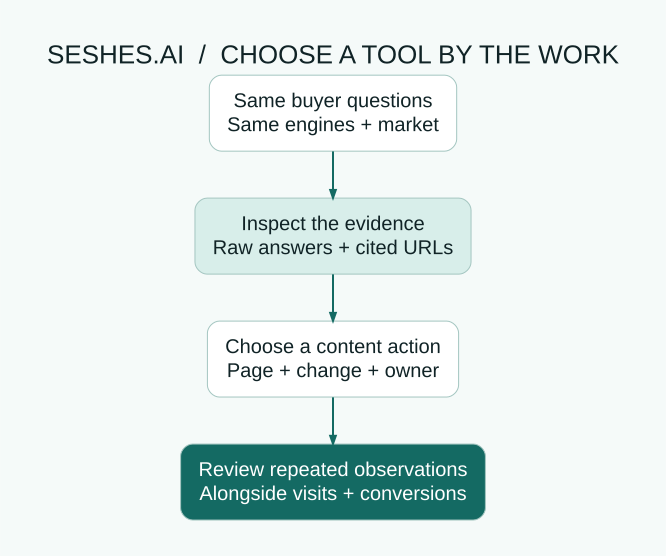
A practical evaluation should ask three things: Which buyer question are we missing? Which page or source helps explain that gap? What change can our team make and review? Ask for a demonstration using your own category before choosing a subscription.
How do the competing platforms differ?
Profound: evaluate its research and marketing-agent workflow
Profound’s current platform overview includes Answer Engine Insights, Prompt Volumes, Shopping, and Agent Analytics, alongside an AI Marketer and agents for marketing work. Consider it when your evaluation includes broader research and assisted execution. Ask how outputs are reviewed and how the available data fits your category.
Peec AI: evaluate focused AI search analytics
Peec AI emphasizes visibility, position, and sentiment. Its overview includes custom prompts, tagging, countries, and competitive examples. For a marketer managing a question panel, the useful test is whether the reporting can distinguish your buyer groups and preserve enough context to explain a change.
Scrunch: evaluate monitoring plus the agent experience
Scrunch documents prompt analytics, citations, competitor benchmarking, and AI bot crawl diagnostics. Its Agent Experience Platform creates a lightweight site experience for agents. Evaluate the monitoring workflow and any delivery implementation separately; determine who owns rollout and how your team would verify the result.
OtterlyAI: evaluate repeated monitoring and reporting
OtterlyAI’s analytics documentation describes brand mentions, citation tracking, sentiment, and share of voice. Its engine options can depend on plan or add-ons. Ask which experiences you can monitor, whether you can inspect individual answers, and how the resulting reports support your content review.
Semrush: evaluate AI visibility within your SEO workflow
Semrush’s feature guide covers Visibility Overview, Brand Performance, and Competitor Research. It connects AI visibility research with its SEO environment. Ask which report uses database-derived prompts, synthetic prompts, or your chosen tracking questions, since those sources answer different questions.
Ahrefs Brand Radar: evaluate broad discovery and custom tracking
Ahrefs Brand Radar offers broad AI-response research. Its custom prompts documentation describes tracking exact buyer questions at configurable frequencies across supported AI experiences. Evaluate the breadth of its discovery data alongside the repeated checks and allowances required for your own panel.
Why repeated observations matter more than one impressive screenshot
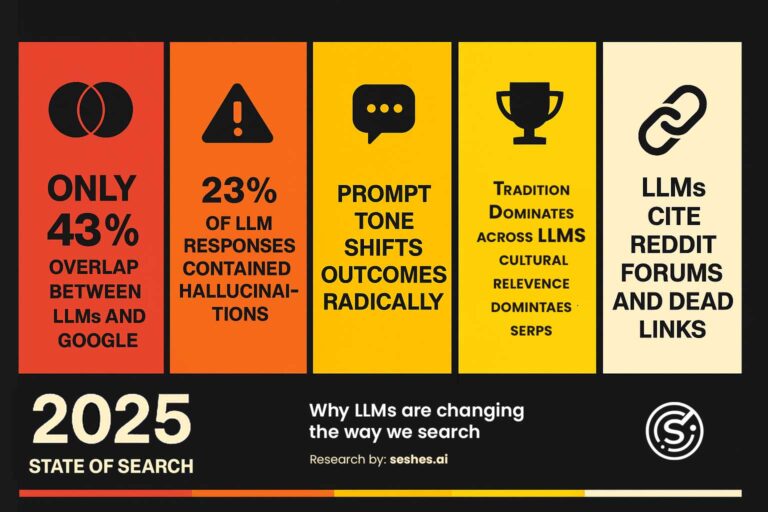
In a September 11, 2026 study, OtterlyAI collected 252,407 answers from 520 prompts across three categories and seven engines, tracked for 40–91 days. In its AI search monitoring sample, daily citation overlap varied substantially by engine. That matters when you evaluate whether a tool’s apparent win is repeatable.
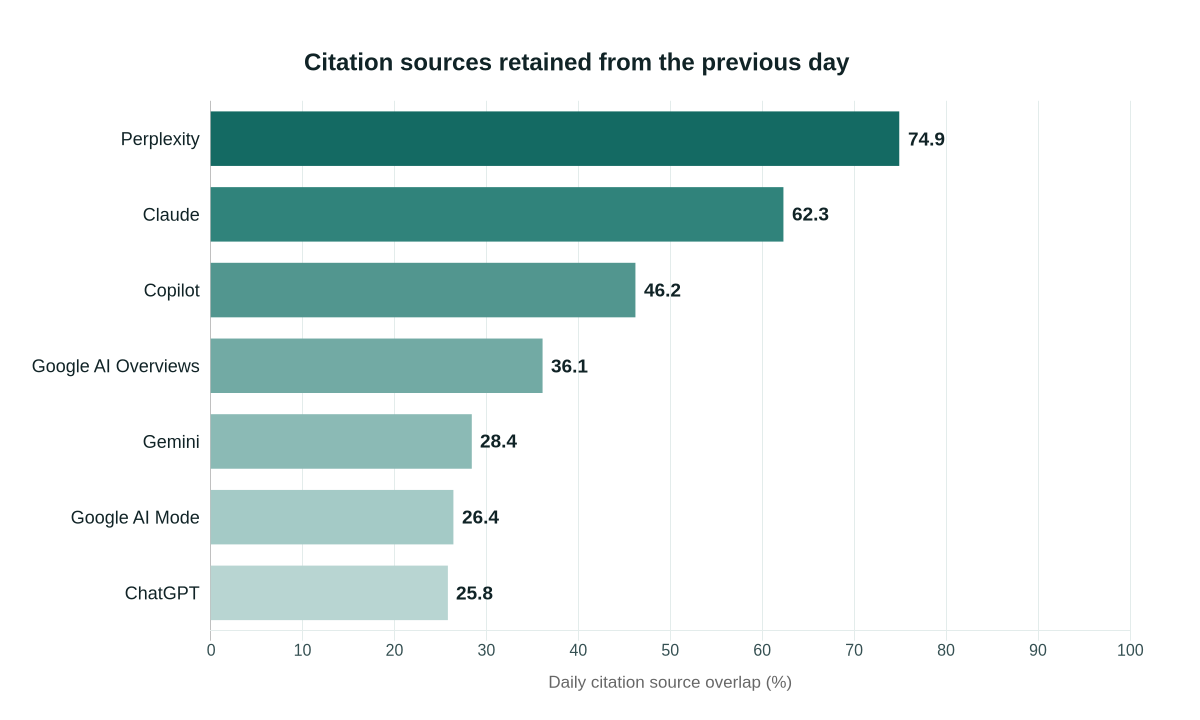
The publisher is a vendor, and the category-specific sample is not a universal benchmark. A lower overlap does not make an engine or monitoring platform worse; it means the cited-source layer changed more in that sample. Judge your tool by whether it exposes that variation and lets you investigate it.
How to run a fair platform pilot
- Define the decision. Choose a buyer problem, a market, your priority pages, and the competitors you genuinely encounter.
- Use the same questions where possible. Compare matching engines, language, location, and schedules. Record unavoidable differences in collection method or model access.
- Inspect raw evidence. Check mentions, citation URLs, answer accuracy, timestamps, and exclusions. Ask how each score is calculated.
- Choose one improvement. Assign a page, a change, and an owner. Review whether the report made that decision easier.
- Check repeatability and outcomes. Continue observations and review relevant visits and qualified actions separately. Confirm plan limits, exports, history, and total cost before purchase.
Do not compare proprietary visibility scores as if they share one unit. A score can change because of weights, prompt selection, engine mix, or missing runs. Matching questions and inspecting answer evidence is more informative than putting differently calculated numbers into a league table.
Frequently asked questions
Which AI visibility tool is best for hands-on marketers?
Our leading pick is Seshes.ai for the brand-to-page workflow described here. The best choice for your team depends on required engines, markets, evidence access, reporting needs, implementation effort, and budget. Test those requirements with your own category.
Can a visibility tool guarantee ChatGPT recommendations?
No. A tool can monitor observations and help identify improvements. It does not control future generated answers or guarantee inclusion.
Can I compare a visibility score directly with another vendor’s score?
Only after confirming equivalent definitions, prompt panels, engines, weighting, and exclusions. Otherwise, compare the underlying observations rather than the headline scores.
Turn the diagnosis into your next Sesh
Bring one priority page, your buyer questions, and two competitors. Book a Seshes.ai demo to see the workflow with your team, or sign up and start tracking your brand. Use the first report to choose one concrete content improvement.
Use the visibility and traffic diagnosis to define the problem, and the 30-day improvement plan to turn your pilot findings into work.
Research checked October 9, 2026. Prepared with AI assistance from public vendor documentation and original research. No hands-on product benchmark was performed. Product packaging and capabilities should be confirmed during evaluation.