Branded vs. Non-Branded AI Visibility: Are New Buyers Finding You?
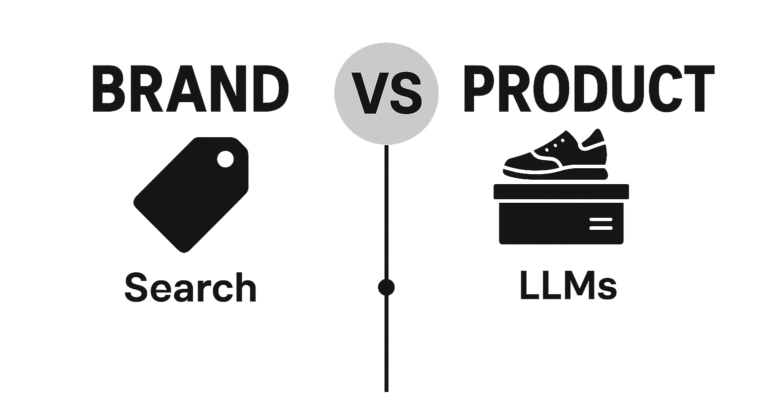
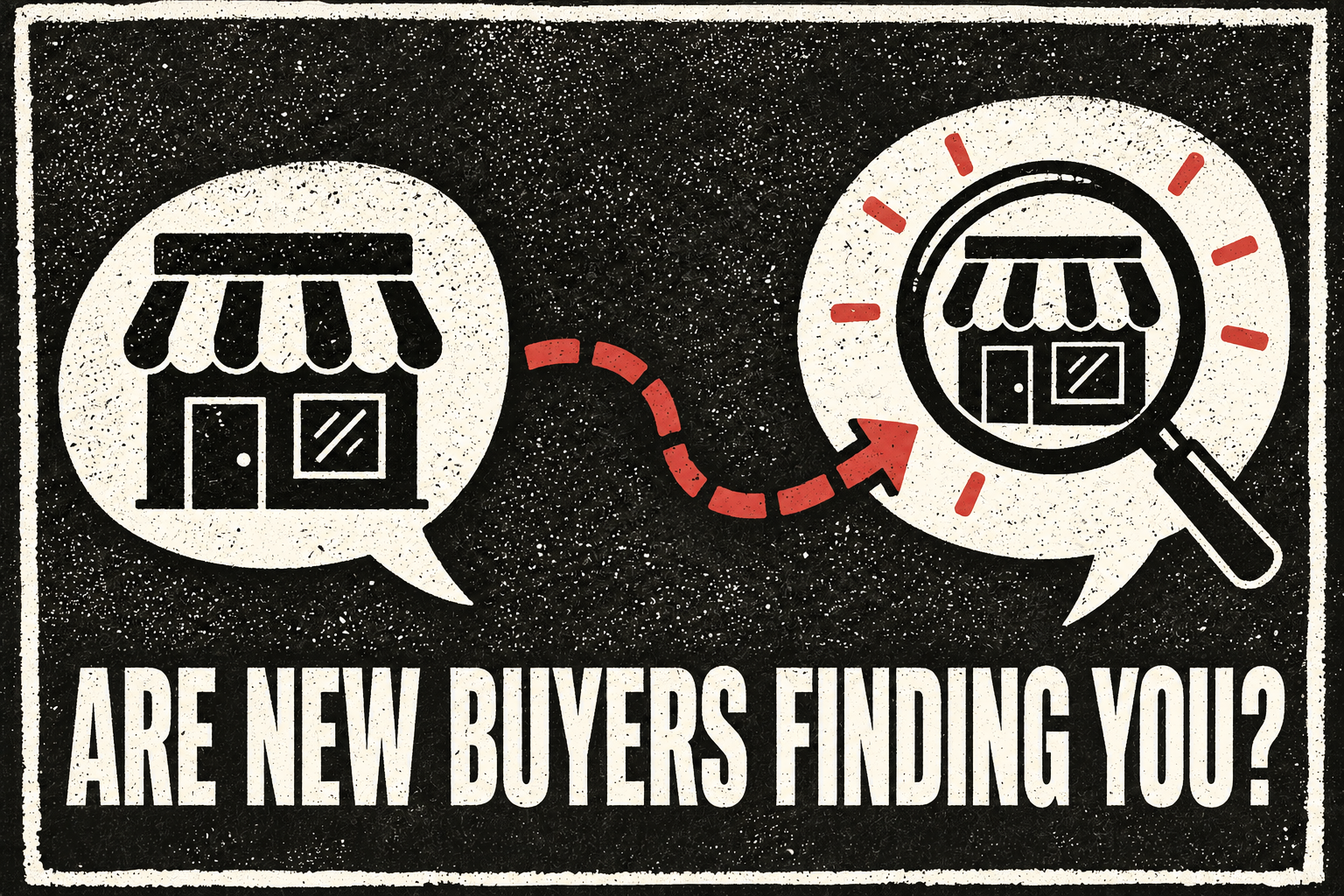
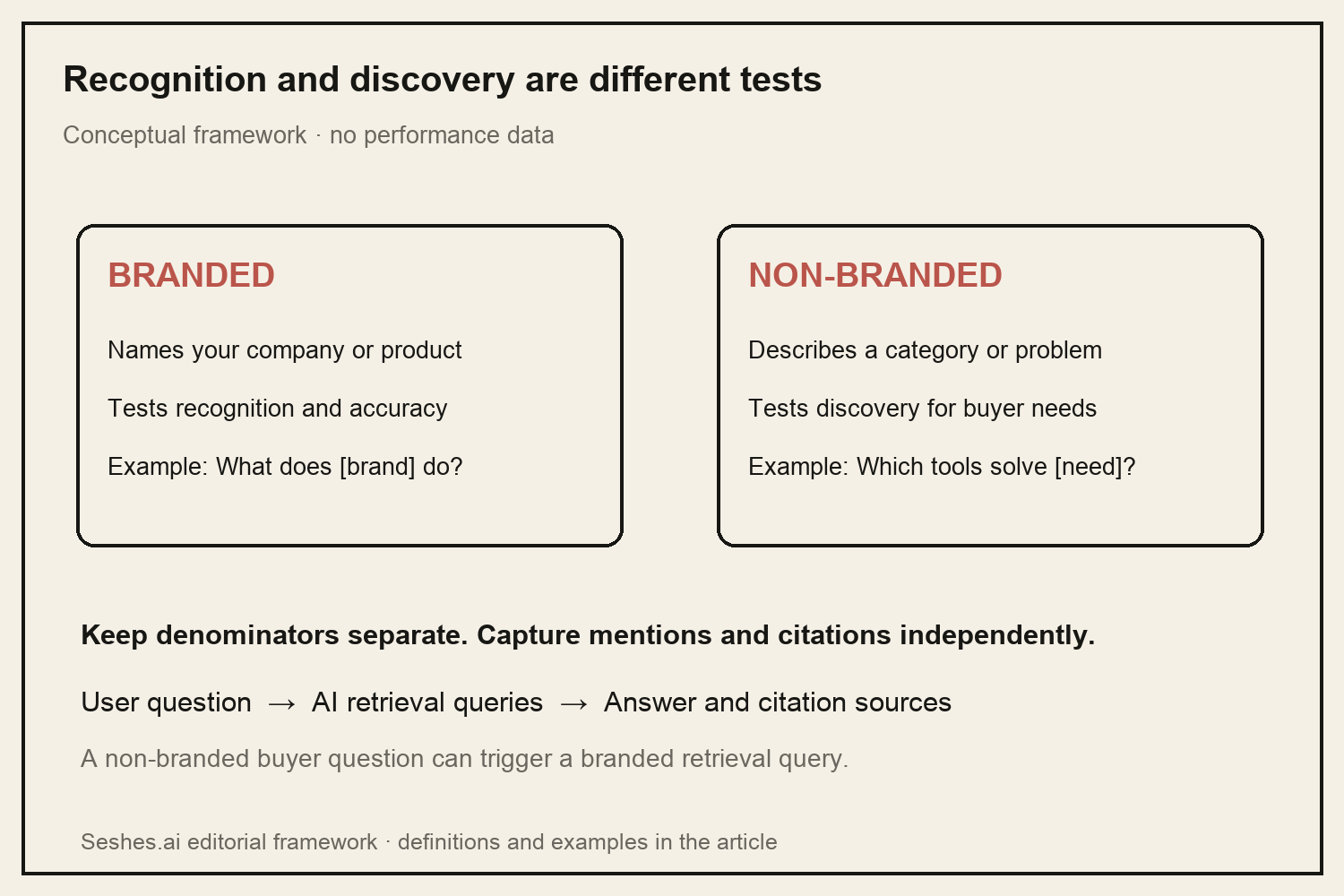
Branded AI visibility measures answers to questions that name your company or product. Non-branded AI visibility measures discovery through category, problem, and use-case questions that do not name you. Track them separately to understand whether AI recognizes your brand and whether it introduces you to new buyers.
If you only ask “What is [brand]?”, you are testing recognition after someone already knows your name. A marketer also needs to ask what happens when a buyer describes a problem, a budget, or a desired outcome. That distinction changes both your question set and the content you prioritize.
The recent reporting change that makes this distinction useful
On September 29, 2026, Microsoft introduced customizable brand terms in Clarity AI Visibility. Teams can refine classification using name variations, abbreviations, translations, and common misspellings. This follows its branded and non-branded query segmentation.
The update is a reminder to define your brand vocabulary before interpreting a dashboard. Clarity’s grounding-query reporting and your own buyer-prompt tests measure different things. A user’s non-branded question can trigger a branded retrieval query inside an AI system; do not treat those as the same question.
Build a brand vocabulary before classifying questions
List your company name, product names, prior names still in circulation, local variants, and common misspellings. Record which terms are ambiguous. A generic word that happens to be your product name should not automatically make every matching question branded.
Keep competitor names in a separate field. A question naming a competitor but not you is useful competitive intelligence, but it deserves its own segment rather than being blended silently into a neutral category sample. Version the vocabulary so that a classification change does not look like a visibility gain.
Create a buyer-question matrix
| Segment | Illustrative prompt | Decision it helps you make |
|---|---|---|
| Branded | What does [brand] offer for a small ecommerce team? | Are core capabilities described accurately? |
| Non-branded category | Which tools monitor brand mentions in AI answers? | Are buyers introduced to your company? |
| Non-branded use case | How can a marketer find inaccurate AI product descriptions? | Does your content address a specific problem? |
| Non-branded constraint | What should a lean marketing team look for in an AI visibility tool? | Is your positioning relevant to real constraints? |
| Competitor-led | What are alternatives to [competitor] for [need]? | Where are comparison and fit gaps? |
These are sample questions, not verified high-volume keywords. Replace them with language from customer interviews, sales calls, support tickets, and your search data. Avoid inserting your own name into discovery questions or phrasing them to favor your product.
Measure each segment with the same rules
Use the same platforms, markets, cadence, and capture method across segments. Save answer text and citation URLs. Note whether each run succeeds, mentions your brand, cites an owned page, recommends it for the stated need, or describes it incorrectly. If a platform is unavailable, exclude the failed run from the denominator and disclose the missing coverage.
Segment mention rate = valid answers mentioning your brand ÷ all valid answers in that segment. Also report citation rate using valid answers citing an owned URL. Show counts, such as 6 of 20, beside any percentage. These are your monitoring measures, not standardized Seshes scores or population-wide market share.
Keep branded and non-branded rates separate even when they move in the same direction. Combining an easy recognition question with a difficult category question hides which task improved. Do not compare a new prompt set with an old set without documenting the change.
What different outcomes tell you
| Observed pattern | Working hypothesis to investigate | Next action |
|---|---|---|
| Brand recognition strong; category discovery weak | The brand is understood after it is named, but less visible for the sampled needs | Review use-case coverage and competitor citation sources |
| Mentions present; owned citations rare | Answers may rely on third-party evidence | Inspect the cited claims and improve relevant authoritative pages |
| Category discovery improving; traffic flat | Visibility may not yet be producing visits, or attribution may be incomplete | Check referrals, customer-reported discovery, and qualified leads separately |
| Visibility varies across models | Sources or model behavior differ in this sample | Inspect answers and sources by platform rather than averaging away the gap |
These patterns are diagnostic hypotheses. They do not prove that a particular content change caused a visibility change. For an accuracy and source review, use our AI brand visibility audit worksheet.
Turn discovery gaps into useful content
When competitors appear for a relevant use case and you do not, inspect the underlying question. Does your website explain the task clearly? Does it show who the product fits, what it does, and where it has limitations? Create one useful page that resolves the gap rather than many nearly identical pages built around question variations.
A practical article might explain how to evaluate AI citation sources, show a real workflow, and link to the relevant product capability. Apply our publishing checklist for AI-assisted content before release. Use our AI visibility tool comparison when deciding what reporting coverage you need.
Use Seshes.ai to make the questions actionable
Seshes.ai’s model comparison, competitor share-of-voice, and AI Shelf View reporting can support your investigation of discovery gaps. Bring a clearly segmented question set so your team can distinguish recognition from consideration. Maintain your worksheet alongside product reports when segment definitions or capture conditions differ.
Book a Seshes.ai demo with five named-brand questions and five category questions to explore how your buyers encounter your brand.
Frequently asked questions
Are non-branded AI prompts the same as Google keywords?
No. They can describe similar intentions, but a conversational prompt may contain several constraints and trigger multiple retrieval queries. Google query impressions are not a direct measure of how often a prompt is used in ChatGPT.
Should every brand focus only on non-branded visibility?
No. Category discovery helps new buyers find you; branded answers help existing prospects verify fit. Track both, and prioritize the gap most relevant to your business.
Can a non-branded question produce a branded citation?
Yes. An AI system can identify a relevant company while answering a category question. Classify the user question separately from the sources and retrieval queries used to answer it.
Research checked October 9, 2026. Prepared with AI assistance and checked against the linked sources. The worksheets are Seshes editorial recommendations, not results from a customer experiment.