BFCM 2025: What Every CMO Needs to Know About Buyer Behavior, AI Influence, and the New Ecommerce Reality
A Strategic Report for Marketing Leaders Navigating 2026
Black Friday Cyber Monday (BFCM) 2025 delivered another record-breaking holiday season on the surface – but underneath the big revenue numbers is a shopping ecosystem undergoing its fastest transformation since the rise of mobile commerce.
For CMOs, this year’s data offers something more important than holiday performance:
a window into the future of consumer decision-making, AI-driven product discovery, and the shifting economics of ecommerce.
This report breaks down the real signals behind the noise – and outlines what marketing leaders must change in 2026 to protect revenue, defend brand visibility, and accelerate growth.

1. The 2025 BFCM Numbers CMOs Need to Pay Attention To
Record top-line, fragile underneath
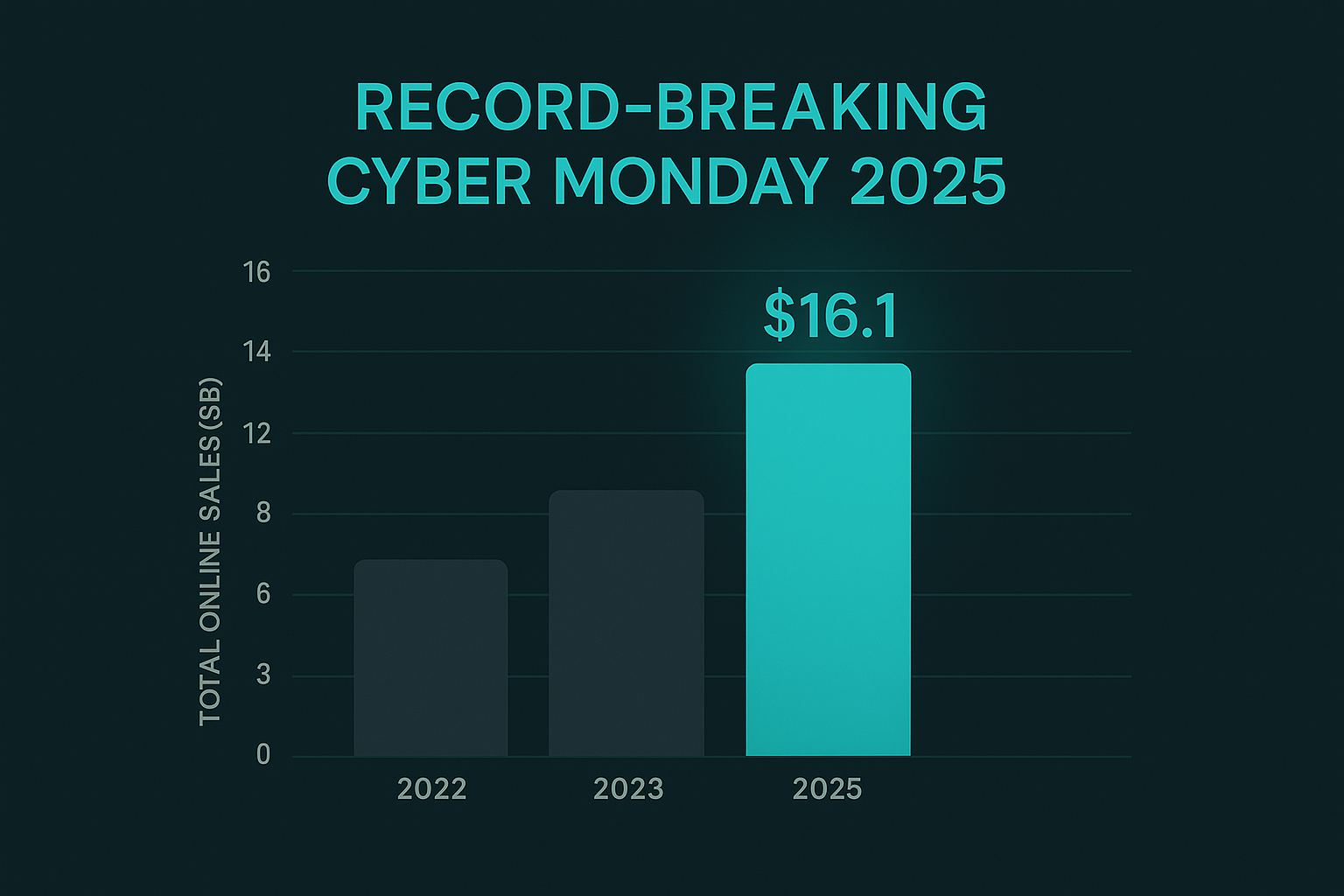
- Cyber Monday 2025 hit $14.25B, the largest online shopping day in U.S. history.
- Cyber Week spending reached $44.2B, up 7.7% YoY.
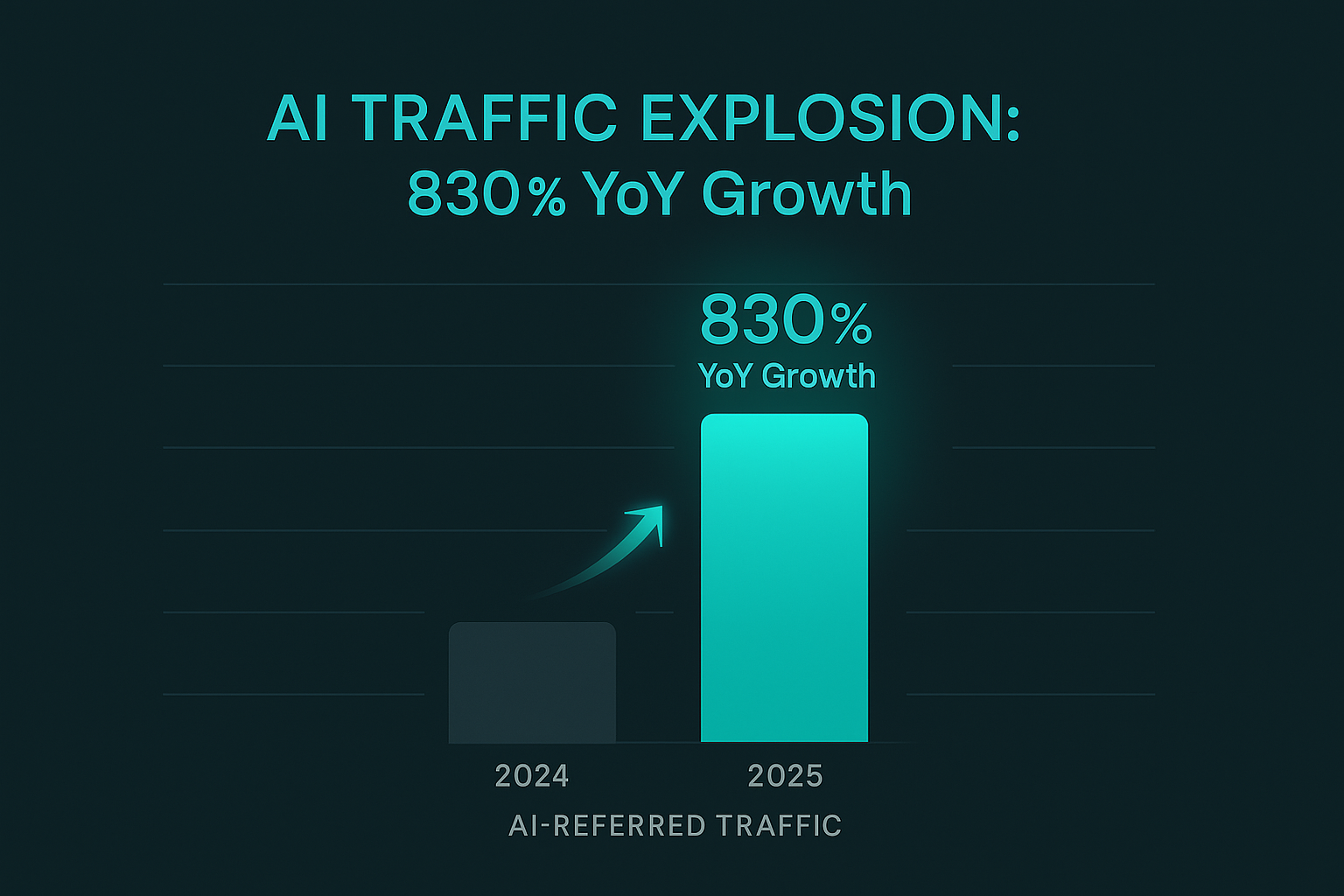
- AI-referred traffic surged 830% YoY, marking the first holiday season where LLMs materially influenced retail demand.
- BNPL exceeded $1B in a single day, underscoring both opportunity and consumer financial stress.
- Average selling prices (ASPs) rose across categories, while unit volumes stagnated or declined.
CMO takeaway:
Revenue is up, but behavior is shifting. Growth is being driven by pricing, AI assistance, and credit – not traditional demand curves.
2. How Consumers Really Shopped in 2025 – and What It Means for Your Funnel
A. The era of the “high-intent, validation-seeking shopper”
Today’s consumer doesn’t trust a single source of truth.
They triangulate:
- Social content
- Retailer websites
- Third-party reviews
- AI recommendations
- Price history tools
- Influencer opinions
Shoppers are prepared, value-sensitive, and skeptical of broad claims.
For CMOs:
You need to shift messaging from “selling” to de-risking the decision:
- Clear value articulation
- Transparent comparisons
- Evidence-backed differentiation
- Cleaner PDP content
- Stronger post-purchase reassurance
Your job is not just to persuade – it’s to validate the shopper’s reasoning.
B. Mobile-first, couch-first, everything-first
Mobile now leads in both traffic and conversions, a milestone that fundamentally changes creative, UX, and landing page requirements.
For CMOs:
A desktop-centric conversion strategy is now a liability.
Your 2026 roadmap should include:
- Mobile-first creative design
- Faster mobile PDP load times
- One-tap payment optimization
- Conversational shopping experiences integrated into mobile UI
Every asset should assume the consumer is scrolling with one thumb while multitasking.
C. BNPL is both a growth lever and a warning signal
BNPL drove significant volume, especially for higher-ticket categories.
But it also indicates financial strain, which may yield:
- Increased returns
- Decreased Q1 discretionary spend
- Lower customer lifetime value (LTV) for pay-later cohorts
For CMOs:
Forecast with caution.
Plan Q1 retention strategies before the downturn shows up in your dashboards.
3. AI Is Now Part of the Funnel – Not a Tool
2025 was the first year where generative AI directly influenced ecommerce demand.
This shift will only accelerate.
A. AI-referred traffic surged 830%
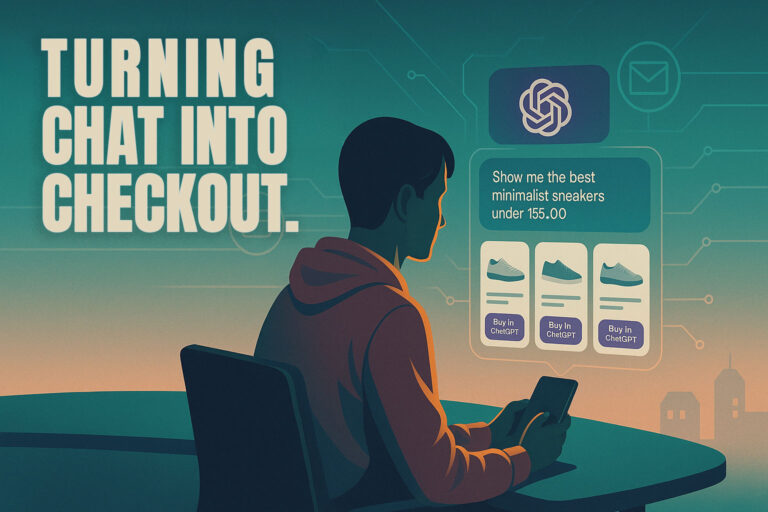
AI systems – ChatGPT, Gemini, Claude, Perplexity, and brand-owned agents – are now legitimate demand conduits.
Consumers ask AI:
- “Best gifts under $50 for my brother”
- “Best alternatives to Nike Pegasus”
- “What should I buy instead of a Dyson?”
- “Top-rated cookware sets for beginners”
When an AI model produces a shortlist, brands not included effectively disappear from consideration.
For CMOs:
You must treat AI ecosystems as the new front-line battleground.
This is where AEO (AI Engine Optimization) enters — a discipline your team will adopt in 2026 whether you’re ready or not.
B. AI-assisted shoppers converted at dramatically higher rates
Across Salesforce retail clients, shoppers engaging with AI agents were 38% more likely to purchase.
Why?
AI:
- Removes friction
- Simplifies decisions
- Summarizes complex information
- Reduces cognitive load
- Narrows choices instead of overwhelming them
For CMOs:
AI-assisted buying is not a future trend — it’s a present performance driver.
Your website needs:
- Guided AI shopping experiences
- Attribute-based recommendation systems
- AI-powered FAQs and comparison tools
- Gift finders and “which is right for me?” workflows
This is not a “nice-to-have” in 2026.
It’s an expectation.
C. Retailer-owned AI assistants are becoming a competitive moat
Target, Walmart, Amazon, and major DTC brands introduced AI-powered shopping assistants trained on:
- Product catalogs
- Inventory
- Customer reviews
- Fit/size data
- Return patterns
- Personalized preferences
For CMOs:
If your brand doesn’t build a proprietary AI layer, you will be forced to compete inside someone else’s AI environment – often on unfavorable terms.
Owning your brand’s AI shopping experience becomes a defensive and offensive strategy.
4. Ecommerce Trends Reshaping Marketing Leadership
A. Growth is coming from ASP – not demand
Durable revenue may plateau once pricing, discounts, and BNPL reach saturation.
For CMOs:
Push your teams to prioritize:
- Margin optimization
- Smarter promotions
- Cohort-based discounting
- Personalized offers
- Predictive LTV modeling
Price-led growth is temporary.
Brand-led growth scales.
B. Social commerce drives discovery, but AI validates decisions
Social content still drives interest, but AI is increasingly the “truth filter” before purchase.
For CMOs:
Your social team and your AI strategy must be integrated.
If TikTok wins attention but ChatGPT fails to validate your product, you lose the sale.
C. Data quality becomes a competitive advantage
AI systems work best with:
- Clean product attributes
- Clear descriptions
- Consistent terminology
- High-quality reviews
- Structured specifications
For CMOs:
2026 is the year you invest in product data governance.
Your PDPs aren’t just for humans anymore – they’re for LLMs.
This shift is as big as the semantic SEO revolution of 2013–2016.
5. What CMOs Must Change in 2026: The Executive Playbook
1. Build an “AI Visibility Strategy” into your org structure
Treat AI answers as a new frontier of “placement” – like SEO + retail media + marketplace ranking combined.
Your AI strategy should include:
- AI visibility audits
- Competitor AI presence monitoring
- LLM keyword mapping
- AI shelf-share tracking
- AI-optimized product content
- Clean structured product data
- Category- and persona-driven schema
This is not a campaign.
It’s an always-on function.
2. Deploy AI shopping assistants as a conversion engine
Consumers expect help.
AI gives it instantly.
Your AI assistant should:
- Know your product catalog intimately
- Handle objections
- Recommend bundles
- Personalize suggestions
- Reduce checkout friction
- Improve clarity over specs & fit
- Deflect returns through better pre-purchase guidance
This is a measurable conversion uplift.
And it’s a CMO-owned initiative.
3. Introduce “Validation Marketing” – content built for AI and for doubt reduction
Your teams should produce:
- Clearer comparisons
- Category explainers
- “Best for X” guides
- Transparent competitor analysis
- Simplified value propositions
- Better product education content
AI thrives on structured clarity.
Shoppers do too.
4. Invest in post-BFCM retention and loyalty – before demand drops
BNPL-heavy cohorts won’t behave like traditional buyers.
You need:
- AI-personalized retention sequences
- Predictive churn scoring
- Segmented loyalty offers
- Post-holiday brand-building instead of discounting
- Value-added content (not more promotions)
This is where Q1 revenue is won or lost.
5. Reorganize teams around cross-functional AI integration
Your 2026 org chart should include:
- Head of AI-driven Commerce or AI Shopping Experience Lead
- Product Data Governance Lead
- AI Visibility Analyst
- AI Personalization Manager
This isn’t a tech team problem – it’s a marketing ecosystem evolution.
CMOs who get ahead of this will define their category.
6. The Strategic Mandate for CMOs in 2026
Here’s the truth no one wants to say out loud:
2025 was the last “traditional” BFCM.
After this, everything changes.
AI is now:
- A discovery platform
- A recommendation engine
- A conversion tool
- A competitor amplifier
- A brand visibility arbiter
- A new form of retail media
- An ecosystem that CMOs can influence – but only through strategy and structure
Brands that don’t adapt will lose visibility, margin, and share to competitors who design their business around the new reality: AI is the front door to commerce.
For CMOs, the mandate is clear:
- Lead the transformation
- Own the AI layer
- Redefine how your organization markets, merchandises, and measures
- Build clarity, trust, and validation into every step of the journey
- Treat AI as the new marketplace shelf
- Evolve before your competitors do
2026 belongs to the CMOs who recognize that BFCM 2025 wasn’t a peak – it was a preview.
References & Sources (2025 BFCM Trends, AI Influence, Buyer Behavior)
Primary Reporting & Market Data
- Adobe Analytics – 2025 Holiday Shopping & Cyber Week Insights
- Data referenced across Forbes, Reuters, AP News, and Investors.com coverage.
- Key metrics: AI-referred traffic surge (830% YoY), mobile dominance, category discounting, BNPL usage, Cyber Monday spend ($14.25B), and Cyber Week total ($44.2B).
- Salesforce Shopping Index (Holiday 2025)
- Reporting via Business Insider and Reuters:
- AI-assisted conversions +38% likelihood
- Global AI-agent–driven sales ≈ $13.5B
- YOY increases in AI assistance, cart creation, and guided journeys.
- National Retail Federation (NRF)
- Shopper participation estimates: ~202.9M U.S. consumers during Cyber Week 2025.
News Articles & Analysis
Forbes — John Koetsier
- “Generative AI Traffic to Retailers Up 830%” (Nov 27, 2025)
https://www.forbes.com/sites/johnkoetsier/2025/11/27/generative-ai-traffic-to-retailers-up-830/ - “Cyber Monday 2025: Biggest Online Shopping Day of All Time” (Dec 2, 2025)
https://www.forbes.com/sites/johnkoetsier/2025/12/02/cyber-monday-2025-biggest-online-shopping-day-of-all-time/
Reuters
- “US online spending surges to $44.2 billion during Cyber Week — Adobe”
Coverage of Cyber Monday + Cyber Week totals, AI influence, BNPL usage, and discounting trends. - “US Cyber Monday spending to hit $14.2 billion, Adobe forecasts, as AI fuels momentum”
Pre-event analysis on Adobe’s projections and AI’s expanding role. - “Record Holiday Shopping Amid Consumer Financial Anxiety”
Details on consumer sentiment, economic pressure, and discount-driven behaviors.
AP News (Associated Press)
- “A look at the Thanksgiving shopping weekend and what’s next”
National context for shopper behavior, traffic patterns, in-store vs online trends.
Investors Business Daily / MarketWatch
- “Cyber Monday Shopping Hits Record — Why the Picture Is Mixed for E-commerce Stocks”
Data on AOV increases, unit decline, and retailer performance signals.
Business Insider
- “AI Agents Help Driving Billions in Holiday Sales”
Summaries of Salesforce data: AI-assisted conversions, on-site AI shopping journeys, rising adoption of retailer-owned AI assistants.
Ecommerce & Retail Research
- eMarketer / Insider Intelligence
Insights on mobile commerce growth, social commerce influence, and discount elasticity. - Future Commerce Holiday 2025 Report
Category-specific ASP trends (home goods, food & beverage), unit contraction, omnichannel implications.
Economic & Consumer Behavior Sources
- CivicScience + Kantar Consumer Sentiment Tracking
Decline in financial optimism and increasing cost-driven decision making. - Federal Reserve Consumer Credit Updates (Q4 2025)
Supporting insight on credit utilization, BNPL acceleration, and debt servicing risk.
Optional Extended Sources to Include
If you’d like a fuller academic-style bibliography, I can also add:
- Shopify 2025 Black Friday/Cyber Monday Merchant Report
- BigCommerce 2025 Holiday Trends Report
- Klarna & Affirm BNPL category data
- McKinsey & Bain holiday forecast briefs
- NRF 2025 Holiday Retail Sales Forecast
- Gartner analysis on AI personal shopping assistants
- ArXiv preprints on LLM-driven ecommerce behavior changes (2024–25)