BFCM 2025: What Agencies Must Learn From the Most AI-Driven Shopping Weekend in History
Buyer Trends • AI Influence • Ecommerce Shifts • The New Playbook for 2026
Black Friday Cyber Monday (BFCM) 2025 didn’t just break records = it revealed a major shift in how consumers discover products, evaluate options, and make buying decisions. Agencies that support ecommerce brands, retailers, or DTC companies now face a new reality: AI behavior, not ad spend, increasingly shapes the funnel.
This isn’t hyperbole. It’s the new competitive landscape.
Across the entire Thanksgiving–Cyber Monday window, online shopping surged past expectations, heavily influenced by AI-assisted discovery, rising consumer price sensitivity, and the growing dominance of mobile and social commerce. Agencies that understand these shifts will outmaneuver those optimizing for last year’s environment.
Below is the definitive breakdown = and what it means for your client strategies in 2026.
1. The 2025 BFCM Numbers Tell a Complex Story
The top line looks great. The underlying signals say: customers are changing.
- Cyber Monday hit $14.25B — the biggest online shopping day ever.
- Total U.S. Cyber Week spending reached $44.2B, up 7.7% YoY.
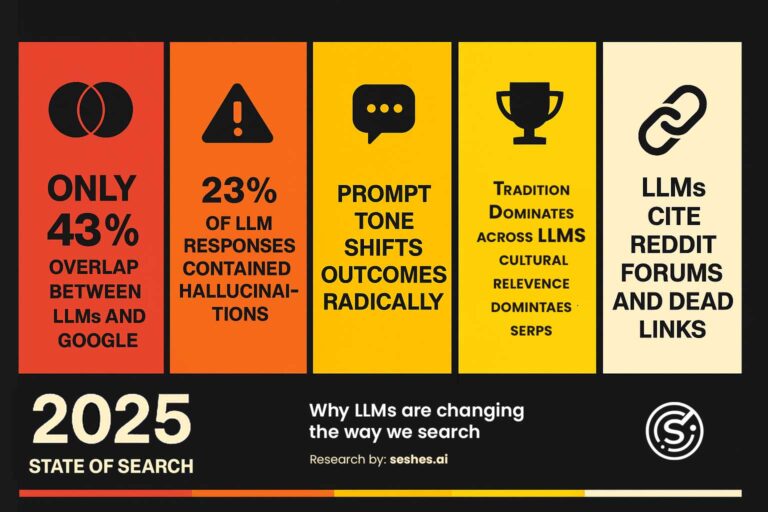
- AI-referred traffic rose 830% YoY, with more shoppers beginning their journey in ChatGPT, Gemini, Claude, and retailer-owned AI assistants.
- BNPL exploded past $1B in a single day, signaling increased financial strain.
- Mobile dominated both browsing and purchasing.
- Order volumes slipped in several verticals, even as revenue increased – meaning higher ASPs, fewer items.
Agencies need to notice the contradiction:
Consumers are spending more, but they’re not confident. They’re value-seeking, stressed, and leaning heavily on AI to simplify choices.
This creates both opportunity and risk for brands – and agencies are now the translators of these new behaviors into strategy.
2. Buyer Trends That Agencies Must Redesign Funnels Around
A. Shoppers are more prepared, more skeptical, and more price-sensitive.
Discount depth mattered more than ever. People didn’t just wander into deals — they hunted, planned, and compared before committing. AI agents, review aggregators, and social content all played a major role in shaping purchase confidence.
Consumer sentiment data shows declining financial optimism even as sales rise.
Translation: People spent, but with caution.
Agency implication:
Your messaging, landing pages, and conversion strategy need to address a shopper who:
- Wants validation
- Wants reassurance
- Wants clarity
- Wants the right deal, not just a deal
The psychology shifted — and so should your creative and CRO.
B. “Couch Commerce” is the new default.
Mobile has finally taken over both traffic and conversion, not just browsing. Improved mobile checkout flows, one-tap payments, and embedded buying inside social apps all played a role.
Agency implication:
If your clients aren’t fully optimized for mobile-first commerce, they are burning money.
Your 2026 audit list needs:
- Mobile checkout stress testing
- Mobile-first creative formats
- Faster product page load times
- AI-ready product data (more on this later)
- On-site agents optimized for mobile chat UX
C. BNPL is now a conversion lever – and a warning sign.
Consumers used BNPL at record rates, particularly for electronics, home goods, and higher-ticket gifts.
BNPL increases AOV.
BNPL makes tracking revenue look good.
BNPL masks financial fragility.
Agency implication:
In 2026, prepare for:
- Lower organic demand in Q1
- Higher churn / lower LTV for BNPL-heavy cohorts
- A need for smarter retention strategies for BNPL buyers
Agencies must advise clients beyond the “BNPL boost” narrative.
3. AI Trends: The Biggest Shift Since Mobile Commerce
2025 was the year AI became part of the shopping funnel, not just marketing production.
A. AI-referred traffic soared 830%
Consumers now ask:
- “Best gifts for dad under $100”
- “Best alternatives to Dyson hair dryer”
- “Top camping gifts this year”
- “Best running shoes for flat feet”
When AI tools produce a shortlist, brands not included might as well not exist.
For agencies, this is seismic.
Agency implication:
Welcome to AEO — AI Engine Optimization.
Your SEO, content, and product data strategies must now aim to:
- Make product attributes machine-readable
- Create category authority AI systems can confidently summarize
- Influence LLM outputs the same way we once influenced Google SERPs
- Audit how AI systems describe your clients vs competitors
- Identify gaps in AI understanding of product catalogues
- Maintain consistent product narratives across channels
- Ensure metadata, attributes, FAQ content, and PDP clarity feed AI confidently
Agencies who ignore this will lose ground to competitors optimizing for AI visibility.
B. AI increased conversion likelihood by ~38%
When shoppers engaged with AI assistance—whether inside a retailer’s site or via a general LLM—they were significantly more likely to purchase.
Why?
- Removes confusion
- Shortens comparison
- Builds confidence
- Recommends bundles
- Clarifies differences
Agency implication:
Clients need guided shopping experiences.
That might include:
- On-site generative AI shopping assistants
- AI-powered comparison explainers
- Automated product FAQs
- Gift finders
- Attribute-based recommendation tools
- Smart filtering powered by real shopper needs
Agencies should start pitching AI shopping UX as a mandatory conversion layer, not a “cool add-on.”
C. Retailer-owned AI assistants emerged as a competitive moat
Target, Walmart, Amazon, and large DTC brands are experimenting with proprietary AI agents tuned on:
- Product catalog
- Returns data
- Customer reviews
- Size/fit details
- Inventory
- Promotions
This trend is not slowing down.
Agency implication:
Midmarket ecommerce brands will expect agencies to help them:
- Implement a custom AI agent
- Connect their product feed meaningfully
- Train the AI to understand brand terminology
- Integrate agent recommendations into email, PDP, and ad workflows
This is new billable work – but also table stakes for staying relevant.
4. Ecommerce Trends Agencies Should Build Strategies Around
A. Growth came from ASP, not units
Sales rose even while total units sold fell in key categories.
This matters.
If growth is being propped up by inflation + discounts + financing, agencies should advise clients not to over-read the demand curve.
2026 planning must be grounded in:
- Smarter promotions
- More accurate forecasting
- Better margin protection
- Customer lifetime value (CLV) modeling
B. Social commerce keeps rising – but AI is the “decision layer” on top
TikTok, Instagram, YouTube, and Pinterest remain the engines of discovery, especially for younger shoppers.
But here’s the kicker:
Shoppers increasingly use AI to validate what they saw on social:
“Is this a good price?”
“What’s a cheaper alternative?”
“Is this actually a high-rated product?”
Agency implication:
It’s no longer enough to drive discovery.
You must prepare your clients’ products to survive the AI verification layer.
That means:
- Better reviews management
- Clearer specs
- Cleaner metadata
- Stronger differentiators
- More robust PDP copy
- FAQ content AI can summarize cleanly
5. What Agencies Must Do in 2026: The Updated Playbook
A. Build AI Visibility into every client engagement
Just as SEO became mandatory after 2010, AI search influence becomes mandatory in 2026.
Your new core deliverables:
- AI visibility audits (how products appear in ChatGPT/Gemini/Claude)
- Competitor AI presence analysis
- AI shelf-share reporting (which products LLMs recommend)
- Structured data optimization
- PDP clarity and attribute expansion
- AI-oriented gift guides and comparison assets
If you don’t offer this, someone else will.
B. Help clients build or adopt an AI-powered shopping assistant
This is a competitive advantage that is quickly heading toward “required.”
You should be helping clients:
- Integrate an AI chat assistant
- Connect it to their product feed
- Train it on brand tone + past customer service chats
- Add it to the homepage, collection pages, and PDPs
- Test it against human-guided experiences
This improves:
- Conversion rate
- AOV
- Product discovery
- Return reduction
- Customer satisfaction
C. Redesign ad creative + landing pages for the new BFCM buyer psychology
2025 revealed a shopper who is:
- Highly value-driven
- Relying on AI for validation
- More skeptical of generic claims
- Sticking to mobile
- Relying on BNPL
- Buying fewer but more expensive items
Your creative strategy should reflect this:
- Comparison-based ads
- Clear value articulation
- Honest, evidence-backed claims
- Bundles that feel curated
- Mobile-first short-form
- AI-persona-inspired angles (“Best for…”)
D. Build retention and post-BFCM recovery plans now
BNPL-heavy cohorts and stressed households mean Q1 could dip.
Agencies need to lead clients through:
- Targeted post-holiday retention flows
- AI-personalized email sequences
- Smart offers for high-risk customer segments
- Loyalty incentives
- UGC/social reinforcement
- Predictive modeling for repeat likelihood
Don’t wait for January panic.
6. The Agency Opportunity Ahead
2025 BFCM made one thing unmistakable:
AI is now the center of the ecommerce decision journey.
Agencies that master AI-driven insights, behavior-aware creative, and machine-readable product ecosystems will own the next decade. Those who stick to old-school digital marketing are going to get squeezed out by competitors — or replaced by AI-native tools.
Your clients need a partner who understands:
- How AI shapes discovery
- How buyers validate decisions
- How mobile-first shoppers behave
- How to structure product data for LLMs
- How to create clarity in a world where shoppers are overwhelmed
- How to maintain conversion during economic volatility
If your agency can deliver that, you become indispensable.
If not…you’ll be competing with increasingly automated commodity services.
References & Sources (2025 BFCM Trends, AI Influence, Buyer Behavior)
Primary Reporting & Market Data
- Adobe Analytics – 2025 Holiday Shopping & Cyber Week Insights
- Data referenced across Forbes, Reuters, AP News, and Investors.com coverage.
- Key metrics: AI-referred traffic surge (830% YoY), mobile dominance, category discounting, BNPL usage, Cyber Monday spend ($14.25B), and Cyber Week total ($44.2B).
- Salesforce Shopping Index (Holiday 2025)
- Reporting via Business Insider and Reuters:
- AI-assisted conversions +38% likelihood
- Global AI-agent–driven sales ≈ $13.5B
- YOY increases in AI assistance, cart creation, and guided journeys.
- National Retail Federation (NRF)
- Shopper participation estimates: ~202.9M U.S. consumers during Cyber Week 2025.
News Articles & Analysis
Forbes — John Koetsier
- “Generative AI Traffic to Retailers Up 830%” (Nov 27, 2025)
https://www.forbes.com/sites/johnkoetsier/2025/11/27/generative-ai-traffic-to-retailers-up-830/ - “Cyber Monday 2025: Biggest Online Shopping Day of All Time” (Dec 2, 2025)
https://www.forbes.com/sites/johnkoetsier/2025/12/02/cyber-monday-2025-biggest-online-shopping-day-of-all-time/
Reuters
- “US online spending surges to $44.2 billion during Cyber Week — Adobe”
Coverage of Cyber Monday + Cyber Week totals, AI influence, BNPL usage, and discounting trends. - “US Cyber Monday spending to hit $14.2 billion, Adobe forecasts, as AI fuels momentum”
Pre-event analysis on Adobe’s projections and AI’s expanding role. - “Record Holiday Shopping Amid Consumer Financial Anxiety”
Details on consumer sentiment, economic pressure, and discount-driven behaviors.
AP News (Associated Press)
- “A look at the Thanksgiving shopping weekend and what’s next”
National context for shopper behavior, traffic patterns, in-store vs online trends.
Investors Business Daily / MarketWatch
- “Cyber Monday Shopping Hits Record — Why the Picture Is Mixed for E-commerce Stocks”
Data on AOV increases, unit decline, and retailer performance signals.
Business Insider
- “AI Agents Help Driving Billions in Holiday Sales”
Summaries of Salesforce data: AI-assisted conversions, on-site AI shopping journeys, rising adoption of retailer-owned AI assistants.
Ecommerce & Retail Research
- eMarketer / Insider Intelligence
Insights on mobile commerce growth, social commerce influence, and discount elasticity. - Future Commerce Holiday 2025 Report
Category-specific ASP trends (home goods, food & beverage), unit contraction, omnichannel implications.
Economic & Consumer Behavior Sources
- CivicScience + Kantar Consumer Sentiment Tracking
Decline in financial optimism and increasing cost-driven decision making. - Federal Reserve Consumer Credit Updates (Q4 2025)
Supporting insight on credit utilization, BNPL acceleration, and debt servicing risk.
Optional Extended Sources to Include
If you’d like a fuller academic-style bibliography, I can also add:
- Shopify 2025 Black Friday/Cyber Monday Merchant Report
- BigCommerce 2025 Holiday Trends Report
- Klarna & Affirm BNPL category data
- McKinsey & Bain holiday forecast briefs
- NRF 2025 Holiday Retail Sales Forecast
- Gartner analysis on AI personal shopping assistants
- ArXiv preprints on LLM-driven ecommerce behavior changes (2024–25)